How to use
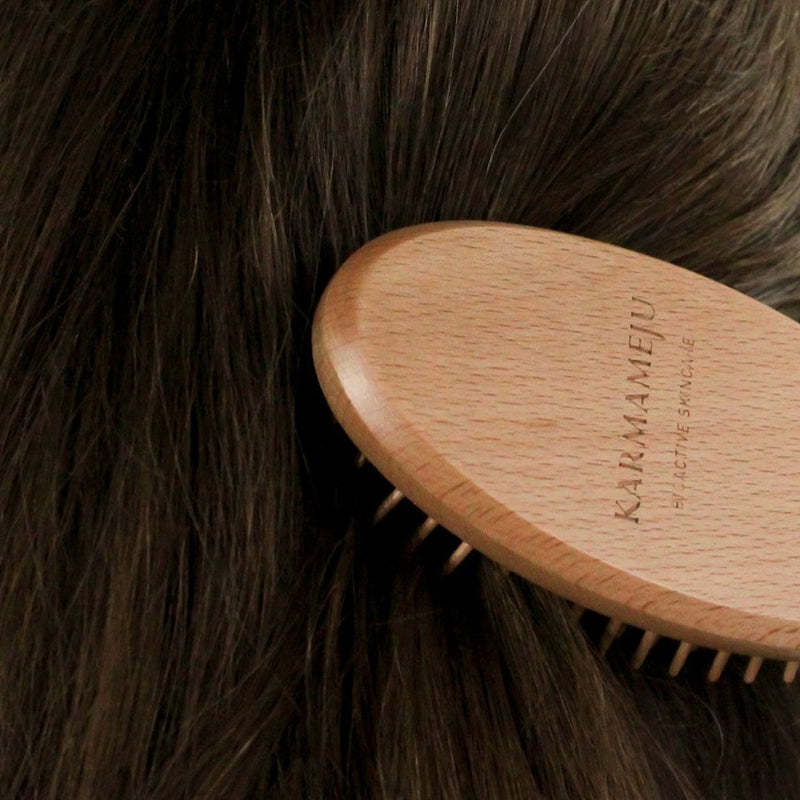
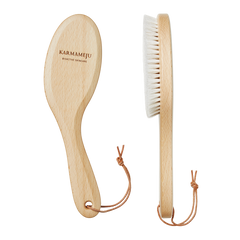
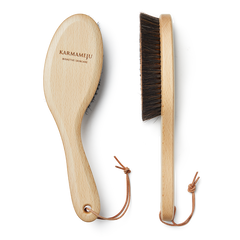
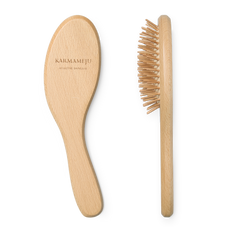
- Brush your hair thoroughly and evenly – try to make brushing your hair a daily mini-ritual. Use the few minutes it takes to brush your hair to turn your focus inwards and take a few deep breaths.
- It is healthy for the scalp to be massaged and stimulated by soft bristles. It’s just like dry brushing your body. It removes dead skin and stimulates blood circulation in the scalp, which is key to promoting hair growth and preventing hair loss. Regular exfoliating scalp massages also help to reduce dandruff and dryness naturally.
- To avoid split ends, you should always brush wet or dry hair in small sections, starting from the ends and working your way up towards the scalp, finishing with a thorough brushing of the hair and scalp.
- Brush according to your hair type: If you have straight hair, we recommend that you avoid brushing it whilst it is wet. Straight hair offers no resistance when the brush glides through it, and in its vulnerable wet state, there is therefore a greater risk of breaking the hair strands. The situation is different for curly hair, which, with its coarser texture, will benefit from being brushed whilst wet.
Do not brush irritated or damaged skin. Take extra care around raised moles. Keep out of reach of babies and pets.
Cleaning
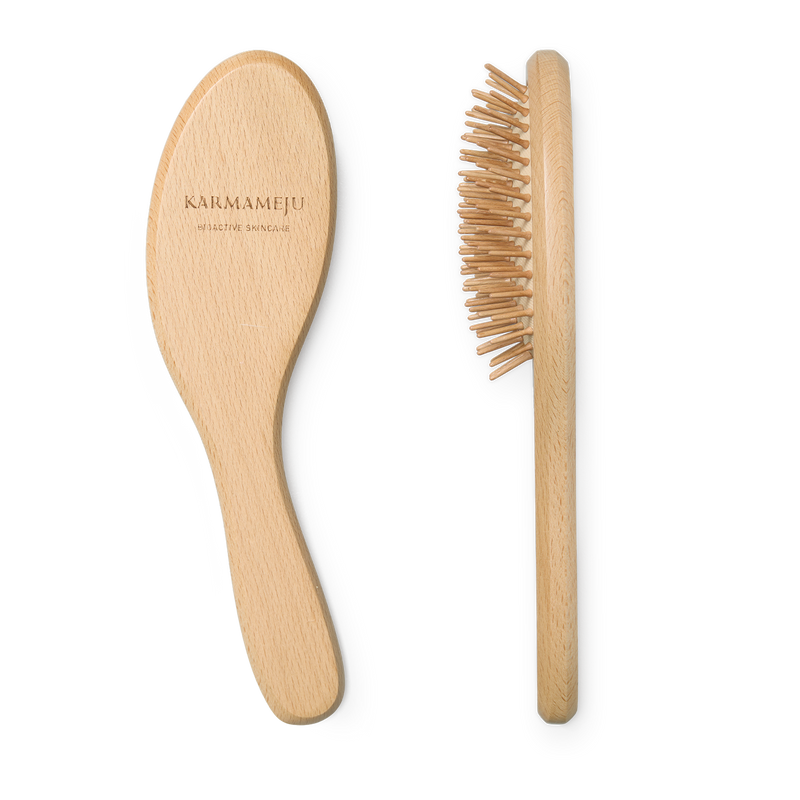
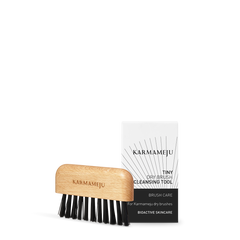
- Remove hair, dirt and styling residue from the base of the brush head.
- Clean the wooden bristles with a damp cloth. Leave the brush to dry without direct contact with heat, with the bristles facing downwards.
- Oil the wood at regular intervals.
- Do not use boiling water to clean the brush.